The old town is more than a list of monuments. This guide shows how to explore its streets, understand the fortifications and plan a relaxed visit without missing the practical details.
INDEPENDENT ATLANTIC COAST TRAVEL GUIDE · LAST CHECKED OCTOBER 2026
Historic statusUNESCO World Heritage since 2001
Getting aroundExplore on foot
General accessPublic streets are free to enter
Best approachAllow time to wander
A PRACTICAL GUIDE
Exploring the old town.
The medina is compact and best explored on foot. This page covers what to look at, how long to allow and what to check before you go; the wider history and arts are on the Culture & Heritage page.
Information on routes, prices, opening times, safety and availability can change. Where useful, direct links to primary sources are provided at the end of the guide.
01 / 05
What makes the medina special
The Medina of Essaouira (formerly Mogador) was inscribed on the UNESCO World Heritage List in 2001. UNESCO describes it as a well-preserved mid-eighteenth-century fortified seaport, laid out on a European plan influenced by Vauban’s fortification model but built in a North African setting. Its commercial history connected Morocco, sub-Saharan Africa and European ports.
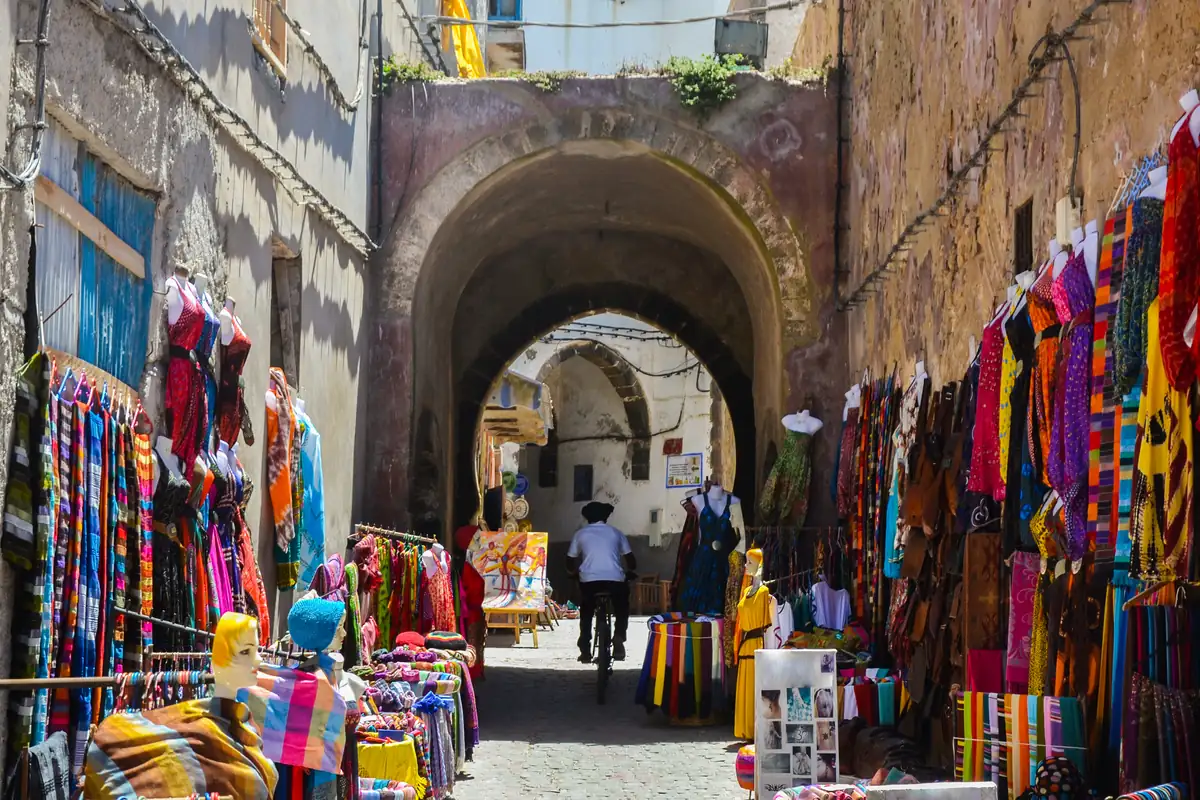
Unlike a museum with one fixed route, the medina is lived in. Streets contain homes, shops, local workshops, places of worship and everyday businesses. Walk thoughtfully, especially in residential lanes, and do not treat every doorway as a public attraction.
02 / 05
Ramparts, Skala and gates
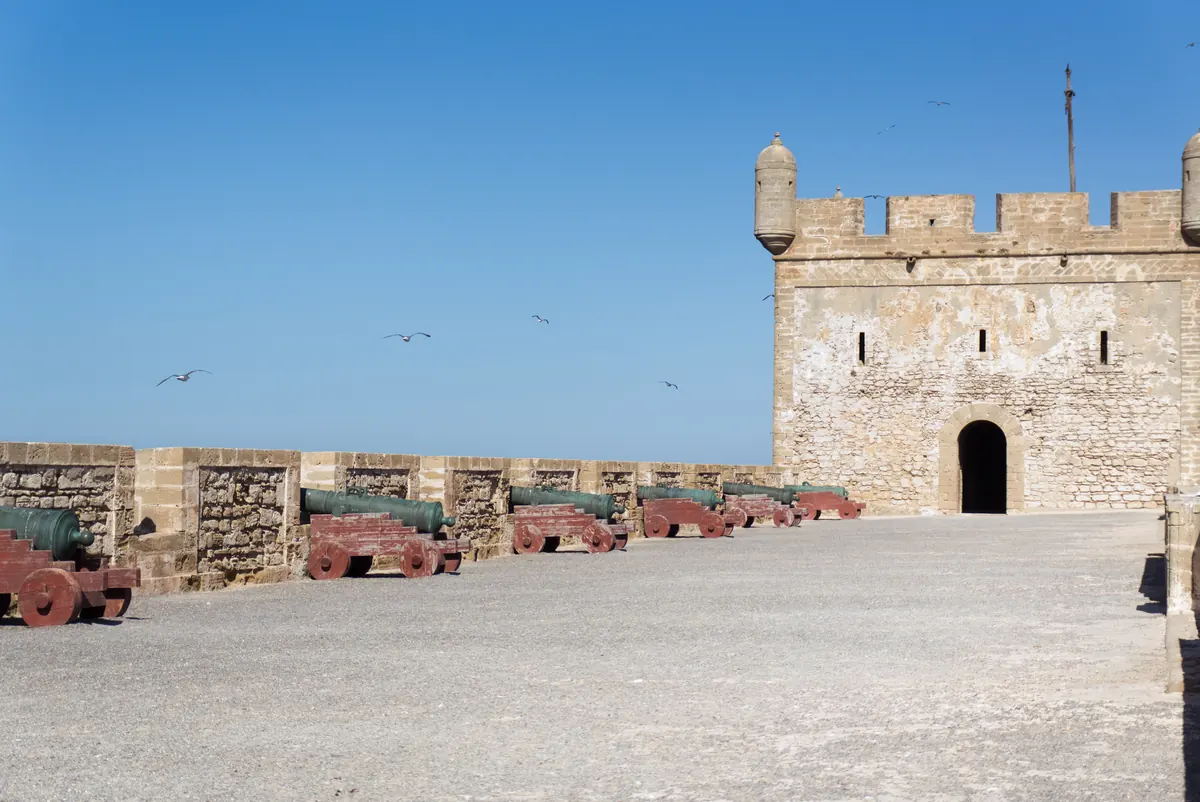
The fortified walls are an essential part of Essaouira’s landscape. The Skala de la Kasbah sits at the north-western point of the medina and is associated with the town’s coastal defences; the Skala du Port stands beside the harbour, next to the monumental Porte de la Marine. The provincial tourism site also lists the Bastion de Bab Marrakech, a tower on the medina’s south-western side. Access arrangements may differ between exterior public areas and particular structures.
For photography, the best plan is to explore public viewpoints and check posted notices before trying to enter a specific monument. The provincial tourism site lists the medina as free to access and dates the Skala du Port to 1764 and notes that it was classified as national heritage in 1924. That site and the national one give no opening hours for the skalas, and some third-party guides report a ticket and daytime hours, so check on arrival.
03 / 05
Markets, workshops and small squares
Many visitors enjoy Essaouira for its unhurried browsing: traditional handicrafts, small art spaces and the activity around local markets. Browse before buying and ask permission before taking photographs of craftsmen or people. The national tourism site also points to the Sidi Mohamed Ben Abdallah Museum, which presents the region’s crafts and popular traditions; check its opening hours and any ticket price before going. For what to buy and how markets work, see Shopping.
Prices for products vary with material, quality and the individual seller. Fixed prices are common in some shops; in others bargaining may be part of the experience. Never assume the first quoted price is universally typical.
04 / 05
How long should you spend here?
For a first exploration, allow a couple of unhurried hours, then return for meals or galleries if you enjoy the atmosphere. The medina can easily become the centre of an entire day when paired with the port and nearby waterfront. Itineraries shows how to combine them.
If you are arriving with heavy luggage, contact your accommodation in advance. Some riads sit inside pedestrian lanes that are not directly accessible by car.
05 / 05
Accessibility and family travel
Central routes can be busy and surfaces uneven. A wheelchair or pushchair may face steps, rough paving and crowded passages. Routes and facilities vary between businesses, so it is sensible to check directly with the places you plan to visit.
For families, keep the walking plan short enough to leave time for food, shade and breaks. The harbour and beach can provide a different activity later in the day.
VISITOR QUESTIONS
Medina questions.
Short answers on access, timing and what to check before you go.
Does it cost money to enter Essaouira medina? +
The public streets do not have a general entry ticket. Certain attractions, museums or services may charge separately.
Is the medina walkable? +
Yes, much of it is explored on foot. Narrow streets and uneven surfaces require extra attention.
How long do you need? +
A few relaxed hours is a sensible start; longer visits allow time for galleries, shopping and meals.
Is it a UNESCO site? +
Yes. The Medina of Essaouira has been on the UNESCO World Heritage List since 2001.
Can cars enter the medina? +
Vehicle access is limited in many lanes. Coordinate luggage pickup and meeting points with your accommodation.
Sources & further reading
Primary and official resources used for background and changeable details. Check the live information before making travel decisions.